Atlas Electronics
Competing Against Texas Instruments and Broadcom by Being Designer-First
Product
ICs & Components
Sales Model
Global Distributors
Target
Design Engineers
The Challenge
Fighting Giants
Atlas Electronics manufactures ICs and electronic components sold through major global distributors. But they're competing directly against massive suppliers: Texas Instruments, Broadcom, and other household names in the electronics industry. These competitors have massive budgets, brand recognition, and entrenched relationships.
The Design-In Battle
In the semiconductor world, winning isn't about selling one unit. It's about "design-in"—getting engineers to choose your components for their board designs. Once a design is complete, it's locked in. The component is used for the product's entire lifecycle. Getting design-in is everything.
Where Design Engineers Actually Research
Design engineers are searching online. They're looking for component specifications, comparing options, checking compatibility, and deciding what to design in. But Atlas's website wasn't built for designers. It was a standard corporate site with generic product pages. Engineers couldn't find the information they needed. Competitors' sites were better. Competitors won the design-in.
Distributors Aren't Enough
Atlas sells through distributors, but distributors can't tell Atlas's story. Engineers need to be attracted directly to Atlas—understand their unique value, see their technical leadership, and choose their components. Without direct customer engagement, Atlas was invisible to the people actually making design decisions.
The Strategy: Designer-First Design
We repositioned Atlas's entire online presence. Instead of a corporate website, we built a platform designed entirely around what design engineers need. The site became a resource—the place designers come to find component solutions, learn about specifications, and make design decisions.
1. Designer-First Content
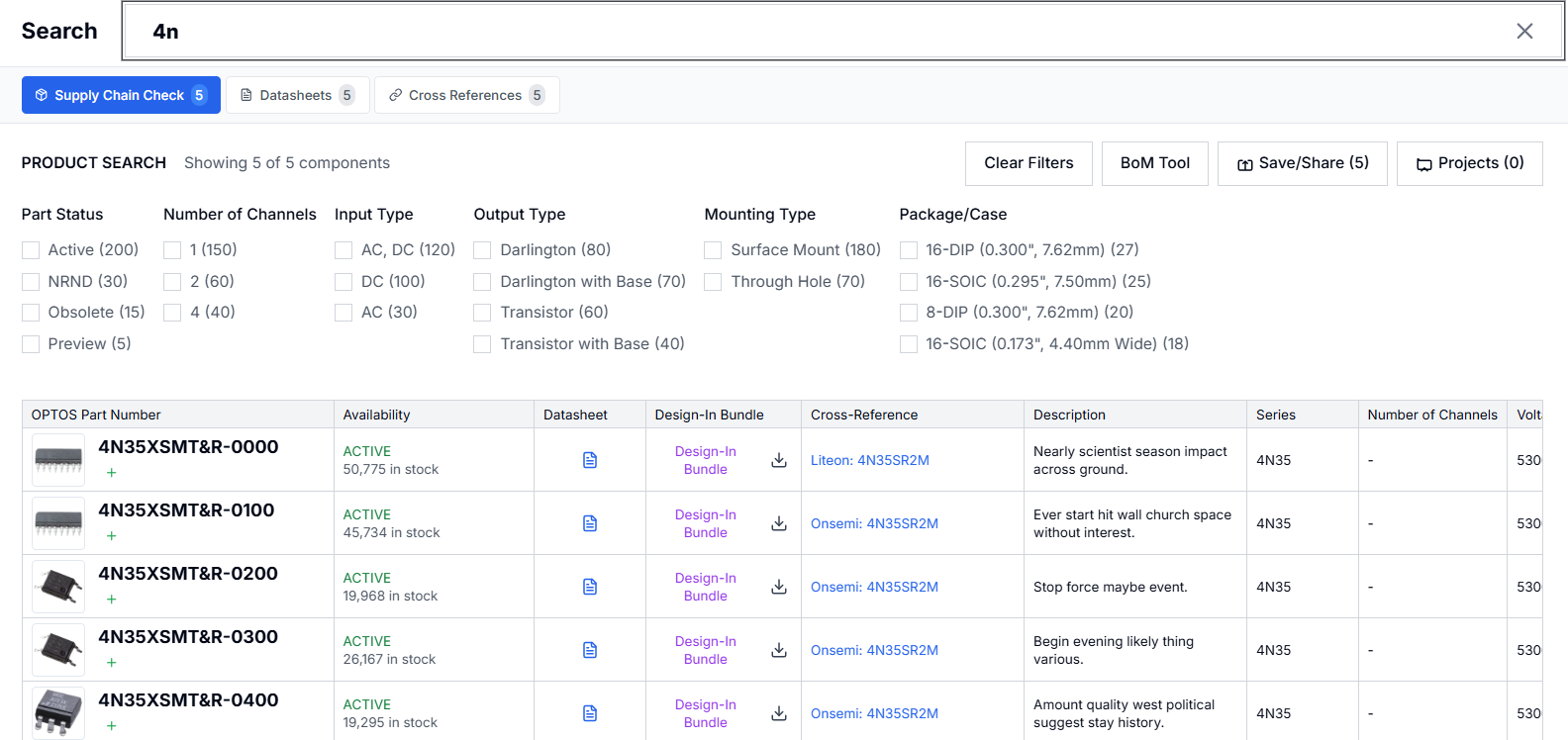
Technical specs front and center. Application notes. Design guides. Reference schematics. Use cases. Not marketing copy—real technical resources that designers actually need. Every page, every section designed to help engineers evaluate and design in Atlas components.
Result: Design engineers find what they need. Atlas builds trust as a technical resource.
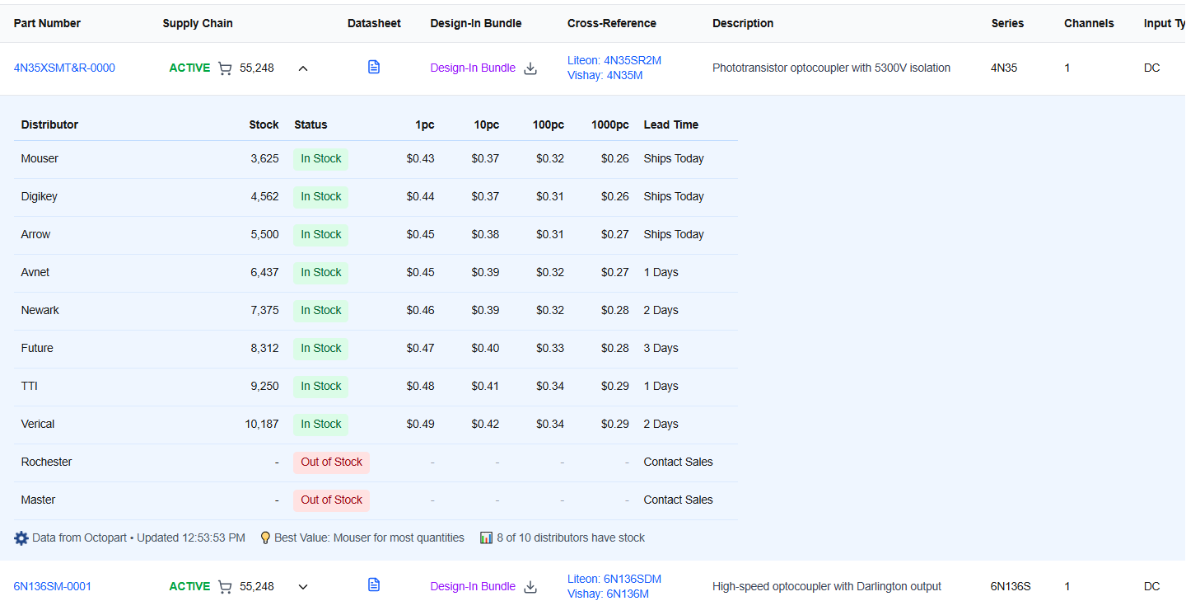
2. Real-Time Supply Chain Data
Partnership with Octopart provides real-time volume and pricing data. Designers see current inventory, lead times, and pricing across global distributors. Complete supply chain visibility—removing friction from the design and procurement decision.
Result: Designers trust Atlas data. They can make informed design decisions immediately.
3. Direct Engagement CTAs
Strategic CTAs throughout the site invite designers to engage directly: sample requests, design consultations, technical discussions. Not "buy now"—"let's design together." This opens direct relationships with the actual decision-makers.
Result: Design engineers contact Atlas. Direct conversations lead to design-in opportunities.
Segmented Marketing: Designer & Procurement
Design-in success requires reaching different audiences with different messages at different times.
Design Engineers
What They Search For
"Low-power ARM processor for IoT", "High-temp MOSFET", "4-channel ADC with SPI interface"
What They Need
Technical specs, comparison tools, datasheets, application examples, compatibility information
Our Message
"Here's the technical solution. See what others have built. Let's design together."
Procurement & Purchasing
What They Search For
"Atlas component pricing", "Volume discounts", "Lead times", "Distributor availability"
What They Need
Real-time pricing, volume availability, lead time information, distributor contacts
Our Message
"Here's transparent pricing and availability. Easy to source. Quick to deliver."
Lead Capture & Nurturing
Different landing pages and email sequences target each audience. Design engineers get resources and design consultation offers. Procurement managers get pricing and availability information. Every touchpoint is tailored to their specific needs and decision criteria—increasing relevance and conversion.
Holistic B2B Marketing
Like Wiser Supply, Atlas's success depends on more than just a beautiful website. We manage the complete B2B marketing ecosystem:
Paid Media for Design-In
Targeted campaigns on Google, LinkedIn, and industry platforms reach design engineers searching for component solutions. Ads showcase Atlas's competitive advantages and drive traffic to specific technical resources.
Goal: Attract high-intent design engineers to the platform.
Klaviyo Email & SMS
Post-design-in campaigns nurture relationships, provide technical updates, share new products, and drive repeat engagement. Targeted messages keep Atlas top-of-mind for future design opportunities.
Goal: Build long-term designer relationships and repeat design-ins.
Acquisition
Paid Media
Attract qualified design engineers
Engagement
Designer-First Site
Convert engineers into design advocates
Retention
Klaviyo
Nurture repeat design-in opportunities
The Results
Increased Design-In Rate
More design engineers are finding Atlas. More are evaluating components. More are choosing Atlas for their board designs. The design-in rate is measurably higher than competitors.
Direct Sales Engagement
Designers are reaching out directly. Technical consultation requests. Sample requests. Design partnership inquiries. Atlas is having direct conversations with the people making design decisions—not waiting for distributors to facilitate sales.
Competitive Positioning
Atlas isn't just competing on spec sheet—it's competing on service, accessibility, and designer focus. Engineers recognize that Atlas is genuinely invested in their success. This builds loyalty and preference versus impersonal giants like Texas Instruments and Broadcom.
Revenue Impact
Design-in rate improvement directly translates to increased revenue. More components specified. Larger volumes through distributors. Longer product lifecycles locked in through board design.
Key Metric
Competitive Win Rate
Atlas wins design-in opportunities against major suppliers by being more accessible, more responsive, and more focused on designer needs.
Business Impact
Sustainable Growth
Each design-in drives recurring revenue for the product's lifetime. This is sustainable, scalable, profitable growth—not one-time transactions.
Lead Generation & Sales Alignment
The designer-first platform generates leads. But leads are only valuable if your sales team can convert them. We build systems that align marketing, sales, and operations—so every lead is captured, tracked, and followed up properly.
Lead Generation Sources
Organic
Designers finding technical resources through search, landing on Atlas pages, requesting samples or design consultations.
Paid Media
Targeted ads driving high-intent prospects to specific landing pages or product pages.
Trade Shows & Events
Business cards collected, conversations started. These leads flow directly into our nurturing system.
Lead Capture & Qualification
Every lead is captured with relevant context: source, product interest, company, role, engagement level. We qualify leads before they hit the sales team's inbox—so sales focuses on high-probability opportunities.
Result: Higher sales productivity. Less time on low-quality leads. More time on genuine opportunities.
Trade Show Lead Follow-Up System
Trade shows are expensive and time-intensive. Most companies collect business cards and then... do nothing. We built a system that turns trade show interactions into revenue:
Step 1: Capture & Context
Every badge scan, business card collected, and conversation noted at the booth is immediately entered into the system with context: which products were discussed, what challenges they mentioned, follow-up actions needed.
Step 2: Instant Nurturing
The moment someone leaves the booth, an automated sequence starts: thank you email, product resources relevant to their discussion, invitation to deeper engagement. They don't go cold.
Step 3: Sales Handoff
High-quality leads are routed to the right sales representative with full context: who they are, what they discussed, what resources they've already received. Sales picks up warm leads, not cold follows.
Step 4: Ongoing Tracking
Every interaction is logged—email opens, PDF downloads, design consultation requests. Sales knows exactly where each lead is in the funnel and can prioritize accordingly.
PLACEHOLDER: Lead Management Dashboard
Show Salesforce CRM dashboard with lead pipeline, source tracking, trade show leads, engagement metrics, and sales follow-up status
Sales & Marketing Alignment
The biggest reason B2B marketing fails: sales and marketing aren't aligned. Marketing generates leads. Sales doesn't follow up. Revenue suffers. We build systems that force alignment:
Shared Metrics
Marketing and sales agree on what matters: lead volume, lead quality, conversion rate, sales cycle length, revenue per opportunity. Both teams are measured on shared outcomes—not conflicting goals.
Lead Qualification
Marketing and sales define what a "qualified lead" looks like. Not every website visitor is a qualified lead. We filter ruthlessly so sales gets high-probability opportunities—not low-intent tire-kickers.
Feedback Loop
Sales feeds back to marketing: which leads converted, which didn't, and why. Marketing uses this data to refine targeting, messaging, and lead qualification—continuously improving lead quality.
Why This Matters for Atlas
Sales teams at Atlas have limited bandwidth. Every moment spent researching low-quality leads is a moment not spent on high-probability opportunities. By giving sales pre-qualified, warm leads with full context—from trade shows, from the website, from paid campaigns—you multiply the team's effectiveness.
Better leads. Faster conversions. More design-ins. Higher revenue.
Salesforce Integration Expertise
All of this alignment requires a CRM that actually works. Most companies buy Salesforce and it sits dormant. We're Salesforce partners—we integrate your website, email, paid media, and sales processes directly into Salesforce so your entire business runs on unified data.
Website to CRM
Website visits, lead submissions, PDF downloads, email sign-ups—all flow directly into Salesforce. Every interaction is logged and tracked so sales knows exactly what each prospect has done.
Result: No manual data entry. No lost leads. Sales always has current information.
Email & Klaviyo Integration
Email engagement (opens, clicks, conversions) syncs back to Salesforce. When a prospect engages with an email, sales is notified. Hot leads don't go unnoticed.
Result: Real-time lead scoring. Sales follows up at optimal moments.
Trade Show Lead Capture
Badge scans from trade shows flow directly into Salesforce with custom fields capturing booth discussions, product interests, and follow-up actions.
Result: Instant lead routing. Immediate follow-up sequences. No lost opportunities.
Lead Scoring & Routing
We configure Salesforce to automatically score leads based on company, industry, engagement, and behavior. High-score leads route to top reps. Lower-score leads get nurtured automatically.
Result: Right lead to right person. Faster conversions. Higher close rates.
PLACEHOLDER: Salesforce Integration Diagram
Show data flow from website, email, trade shows, and paid media all flowing into Salesforce as central source of truth for sales and marketing
Why Salesforce?
Industry Standard
Salesforce is the CRM for B2B companies. Your sales team knows it. Your prospects' teams use it. When you integrate with Salesforce, you're building on a platform every enterprise depends on.
Deep Integration Capability
As Salesforce partners, we can integrate anything. Website platforms, email systems, payment processors, inventory systems. Your entire business flows through Salesforce.
Scalability & Flexibility
Salesforce grows with your business. Whether you're managing 10 sales reps or 100, Salesforce scales. Custom fields, workflows, and automation adapt to your unique needs.
Reporting & Insights
Salesforce dashboards give visibility into pipeline, conversion rates, sales cycle length, revenue forecasting. Leadership can see the entire business in real-time.
How It All Works Together
The Complete Atlas Ecosystem
Designer Finds Atlas Online
Paid search ad, organic search, or website discovery. Designer lands on Atlas, finds technical resources they need, downloads a datasheet, requests a sample.
Lead Captured in Salesforce
Designer's submission flows directly into Salesforce with full context: company, industry, product interest, download history. Lead is automatically scored and qualified.
Automated Nurturing Starts
Klaviyo email sequence begins. Designer receives thank you email, technical resources, application guides. Every open and click is tracked in Salesforce.
Sales Gets Warm Lead
If engagement is high and lead score is strong, Salesforce routes lead to appropriate sales rep with full context: who they are, what they're interested in, what materials they've seen.
Sales Follow-Up & Design-In
Sales reaches out with design consultation offer. Conversation leads to deeper engagement. Designer chooses Atlas for board design. Revenue is locked in.
Ongoing Engagement
Designer stays in Klaviyo sequences to receive new product updates, design resources, and partnership opportunities. Repeat design-in opportunities compound over time.
Lead Quality
Lead Scoring
High-intent leads route to sales first
Sales Efficiency
Time Saved
No research needed. Context is provided.
Revenue Impact
Velocity
Faster conversions. Higher close rates.
Built on Deep Customer Understanding
We didn't build a B2B site and hope designers found it. We researched Atlas's customer audience obsessively:
Who Are Design Engineers?
What platforms do they use? What information do they need? How do they make decisions? What frustrates them? We interviewed engineers, analyzed search behavior, and studied competitor positioning to understand the exact customer journey.
What Builds Designer Loyalty?
Easy access to technical information. Responsive support. Real-time data. Recognition that designers are the decision-makers, not afterthoughts. When engineers feel heard and respected, they become advocates for your brand.
How Do We Measure Success?
Design-in rate. Direct engagement rate. Customer acquisition cost. Revenue per design engineer. Repeat design opportunity rate. These metrics prove whether we've genuinely built something designers value.
Why Atlas Wins
Because we understood that competing against Texas Instruments and Broadcom isn't about having better specs (they're comparable). It's about being more human, more accessible, and more focused on designer success. Atlas wins by being the company that actually respects and serves the people making design decisions.
Key Takeaways for B2B Manufacturing
Designer-First Wins Design-In
In B2B manufacturing, success depends on reaching the actual decision-makers with the information they need. Build for them first.
Technical Content is Marketing
When you provide genuine technical resources and data, you attract high-intent customers and build credibility faster than any advertising message.
Direct Engagement Beats Distributor Dependency
Even if you sell through partners, direct relationships with customers give you competitive advantage and insights competitors don't have.
Sustainable Revenue Comes from Design-In
One design-in drives recurring revenue for the product's lifetime. This beats transactional sales every time.
Ready to Build Your Designer-First Platform?
Whether you're competing against giants or fighting for market share, we know how to build B2B platforms that attract customers and drive sustainable revenue growth.
Schedule Your Strategy CallLet's discuss how we can help you win design-in opportunities and grow your revenue.